Publications récentes

L’Organisation des États turciques, symbole de l’expansion stratégique et de l’essor culturel du monde turc 

Stern, A., « L’Organisation des États turciques, symbole de l’expansion stratégique et de l’essor culturel du monde turc  », Le Rubicon, vol. 6, 4 mai 2026 [https://lerubicon.org/lorganisation-des-etats-turciques-symbole-de-lexpansion-strategique-et-de-lessor-culturel-du-monde-turc/]. Extrait du texte : Le 7 octobre 2025, les chefs d’État de l’Organisation des États turciques (OET) se sont réunis en Azerbaïdjan, dans la ville septentrionale de Gabala. La thématique principale de ce 12ᵉ sommet était : « Paix et sécurité régionales ». Cet intitulé et le choix d’une ville azerbaïdjanaise pour accueillir l’événement ne sont pas anodins : ils montrent que, 2 ans après le blocus prolongé puis l’offensive militaire qui a entraîné l’exode de la population arménienne du Haut-Karabakh, l’Azerbaïdjan cherche à sécuriser ses acquis territoriaux. Dans un contexte international instable, c’est également un moyen de consolider les alliances, dans une

Lire la suite »

Contemporary (Pan-)Turkism: An Ethno-Cultural Ideology Shaping Intergovernmental Cooperation

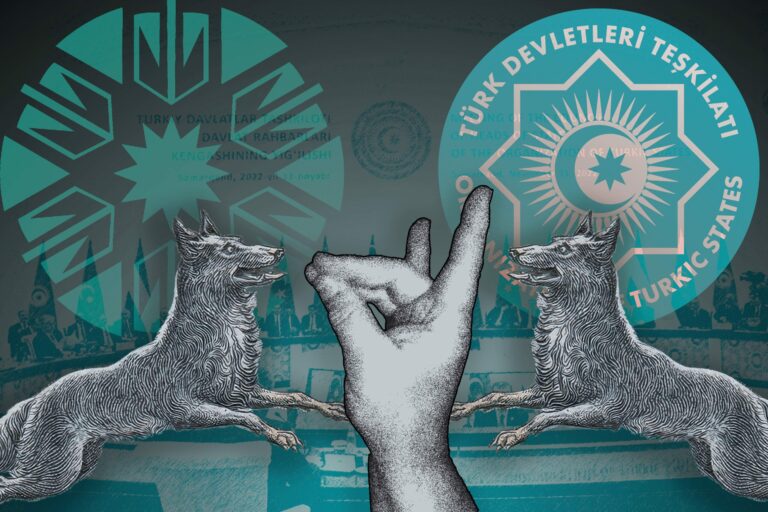
By Aurélie Stern https://www.illiberalism.org/contemporary-pan-turkism-an-ethno-cultural-ideology-shaping-intergovernmental-cooperation Image made by John Chrobak for the article on the link above. Turkism, also known as pan-Turkism, is an ideology that aims to unite all Turkic regions into a single political entity. It emerged in the second half of the 19th century among Turkic-speaking minorities in the Russian Empire and the Ottoman Empire. The influence of Budapest University on this ideology is unmistakable; it was there that philologist Armin Vambery helped develop Turanian theory, which holds that Turkic peoples have ancestral links with other peoples, such as the Hungarians, Finns, Basques, Mongols, and Japanese. Turanism is an expanded version of Turkism, which turns nomadic pastoral peoples into a linguistic and subsequently “racial” entity, like Indo-Europeans and

Lire la suite »

Strateji-Taktik Döngüsünde Bir Araştırma Alanı Olarak Validebağ Korusu

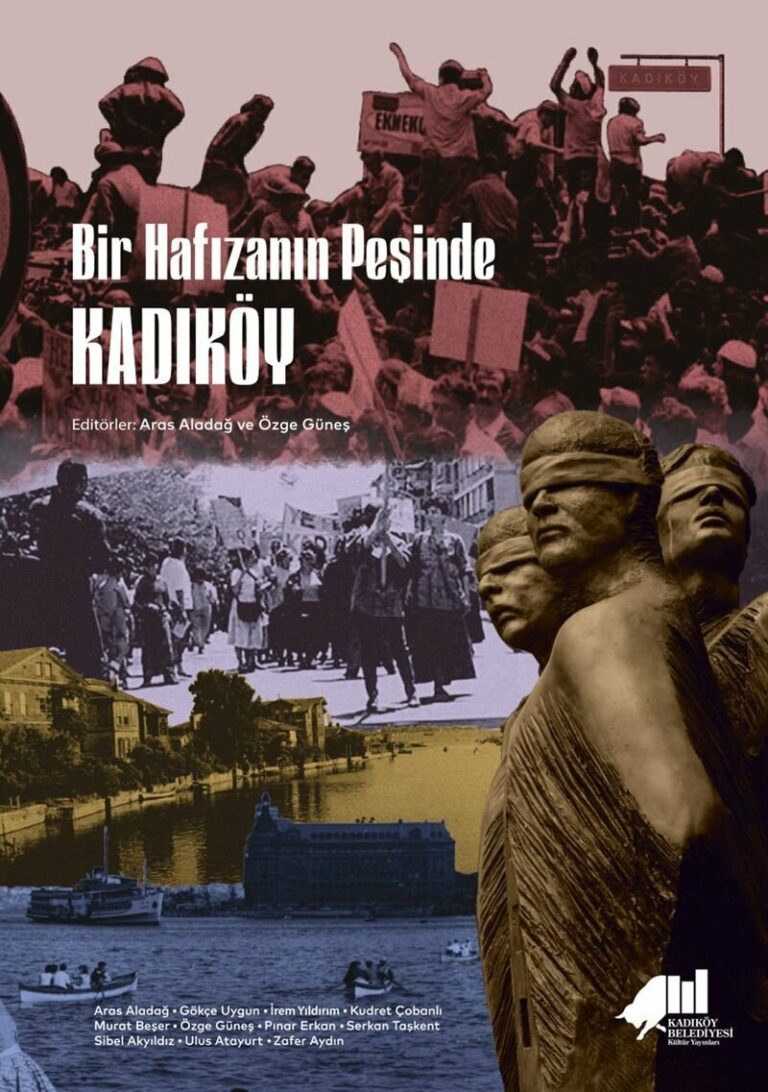
Akyıldız, S. (2026), “Strateji-Taktik Döngüsünde Bir Araştırma Alanı Olarak Validebağ Korusu” [Validebağ Grove as a Field of Research in the Strategy–Tactic Cycle], Article in collective book “Bir Hafızanın Peşinde Kadıköy” [In Pursuit of a Memory: Kadıköy], Kadıköy Belediyesi Kültür Yayınları https://www.kadikoyakademi.org/bir-hafizanin-pesinde-kadikoy-kitabi-yayimlandi/ Bir Hafızanın Peşinde Kadıköy derleme kitap çalışması Kadıköy Belediyesi Kültür Yayınları etiketiyle yayımlandı. Editörlüğünü Aras Aladağ ve Özge Güneş’in yaptığı çalışma, on bir makaleden oluşuyor ve her makale Kadıköy’ün farklı bir dönemine, olayına veya mekânına ışık tutuyor. Kitapta editörlerin dışında Gökçe Uygun, İrem Yıldırım, Kudret Çobanlı, Murat Beşer, Pınar Erkan, Serkan Taşkent, Sibel Akyıldız, Ulus Atayurt ve Zafer Aydın birer makaleyle yer alıyor.

Lire la suite »

Computer-Assisted Reading Tools Marks: First Step of a Promising Protocol

By Anaïs Lamesa, Natália Botica, Paulo Bernardes https://journal.caa-international.org/articles/10.5334/jcaa.221 Abstract This paper presents a multi-modal method for integrating rock-cut structures into current archaeological studies related to Ancient and Medieval periods, particularly focusing on a case study of the north-west wall of the Göreme 4b church in Cappadocia (Turkey). Historically marginalised within archaeological research, rock-cut architecture is now reassessed through a combination of building archaeology, traceology, photogrammetry, and computer-assisted analysis. The primary objective is to establish a replicable protocol for interpreting tool marks to define construction phases and occupation sequences, thereby contributing to relative dating and heritage conservation. The interdisciplinary project involved the creation of a high-resolution 3D model, a relational database, and a GIS-based vectorisation of stratigraphic units (SUs). The 3D

Lire la suite »

Ankara, miroir de la Turquie moderne,

Utopies, pouvoir et résistancesPremière édition Par Gülçin Erdi (directrice de recherche au CNRS (UMR CITERES), coordinatrice du projet ANR SPACEPOL, ancienne responsable de l’OUI) https://www.editions-ulb.be/fr/book/?gcoi=74530100299140#h2tabtableContents Ankara, autrefois ville anatolienne ordinaire, est devenue le coeur de la République en soutenant la lutte nationale en 1920. Jouant un rôle clé dans la guerre d’indépendance et la modernisation, elle incarne les transformations politiques et sociales de la Turquie. Ce livre explore son parcours centenaire, analysant la production symbolique et politique de l’espace urbain. Il étudie ses mutations, des débuts de la République à aujourd’hui, en soulignant les efforts de modernisation, l’impact des idéologies et l’évolution architecturale. Il révèle comment Ankara, née de la steppe, est devenue un symbole de laïcité et de modernité,

Lire la suite »