Publications récentes

Mart 2022

10/03 – 14h-17h – « Osmanlılar adı nereden geliyor? »  Müzeler, Turizm ve Osmanlıların üzerinde anıtlı konuşmalar Osmanlı geçmişinin televizyon dizilerinde sahnelenmesi Paul-Albert Février Salonu Koordinatör: Juliette Dumas Vanessa GUENO (IREMAM) : Les musalsalât syriennes et l’Empire ottoman : histoire d’un électrocardiogramme politique (Suriye musalsalatı ve Osmanlı İmparatorluğu: Siyasi bir elektrokardiyogramın öyküsü) Ludovica TUA (LERASS et IREMAM) : Un héros seul contre tous. La figure du sultan Abdülhamid II et le concept d’altérité dans la série turque Payitaht : Abdülhamid (Herkese karşı tek kahraman. Payitaht: Abdülhamid dizisinde Sultan II. Abdülhamid figürü ve ötekilik kavramı)   * Tüm seminer oturumları hibrit formatta sunulacaktır. Online semineri takip etmek için: https://univ-amu-fr.zoom.us/j/93003448228?pwd=OTUrY25GQTlzSmVKU1hjSkdZdEJSZz09* Oturumlar, Carnet Hypothese üzerinde düzenli olarak kaydedilir ve yayınlanır:https://mondottoman.hypotheses.org (önceki yılın oturumlarının
Lire la suite »

Mars 2022

10/03 – 14h-17h – Table ronde « De quoi les Ottomans sont-ils le nom ? » – Cycle 2 Musées, tourisme et discours mémoriels sur les Ottomans La mise en scène du passé ottoman dans les séries télévisées  Salle Paul-Albert Février Séance dirigée par Juliette Dumas Vanessa GUENO (IREMAM) : Les musalsalât syriennes et l’Empire ottoman : histoire d’un électrocardiogramme politique Ludovica TUA (LERASS et IREMAM) : Un héros seul contre tous. La figure du sultan Abdülhamid II et le concept d’altérité dans la série turque Payitaht : Abdülhamid * Toutes les séances du séminaire sont proposées en format hybride. Pour suivre le séminaire en ligne : https://univ-amu-fr.zoom.us/j/93003448228?pwd=OTUrY25GQTlzSmVKU1hjSkdZdEJSZz09* Les séances sont enregistrées et mises en ligne régulièrement, sur le Carnet Hypotheses https://mondottoman.hypotheses.org (on

Lire la suite »

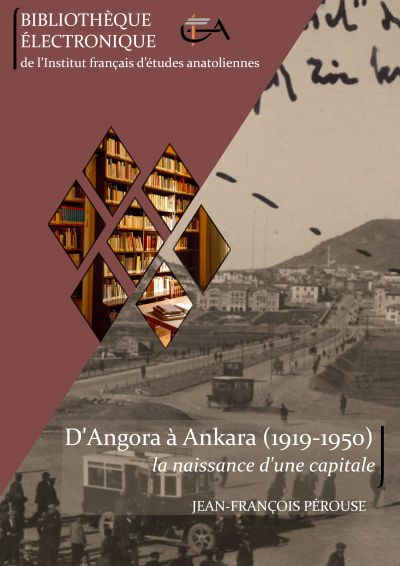
J.-F. Pérouse D’Angora à Ankara (1919-1950) : la naissance d’une capitale

PÉROUSE, Jean-François. D’Angora à Ankara (1919-1950) : la naissance d’une capitale. Istanbul, IFEA, 2022 ISBN : 9782362450730. DOI : https://doi.org/10.4000/books.ifeagd.2351 Cette étude se propose d’analyser – principalement sur la base de sources turques de l’époque – les modalités d’un processus d’aménagement caractérisé par une contradiction permanente entre projet urbain et dynamiques urbaines de facto, durant la période 1919-1950. Pour chaque moment successivement distingué (quatre en tout : 1919-1923, puis 1923-1928, 1928-1938 et enfin 1938-1950) on s’efforce de prendre en compte à la fois le contexte, les acteurs et les expressions concrètes du processus. Au lendemain de la Première Guerre, Ankara est un modeste chef-lieu au cœur de l’Anatolie occidentale, qui ne compte pas plus de 20 000 habitants. Entre 1923, date de la promotion officielle en tant que

Lire la suite »

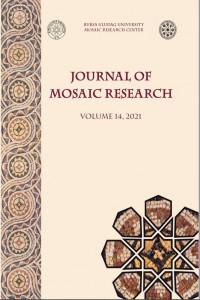
S. Derwael – The Peopled Scroll of the Great Palace Mosaic in Constantinople. New Perspectives

DERWAEL Stéphanie, « The Peopled Scroll of the Great Palace Mosaic in Constantinople. New Perspectives », Journal of Mosaic Research 14, pp. 101-126.  https://doi.org/10.26658/jmr.1012078 Many studies have been devoted to the mosaic of the Great Palace peristyle in Constantinople / İstanbul. To its style, influences and models, as well as to its dating or to the function of the room it decorated. But there is one element that has so far not aroused much interest: the peopled scroll that circumscribes the central panel. The iconographic, chromatic, and technical richness of this border make it much more than a simple ornamental frame. It is even a key element of the pavement. This type of border developed towards the end of the 2nd century

Lire la suite »

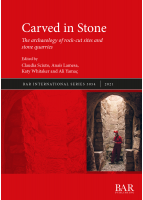
A. Lamesa, C. Sciuto, K. Whitaker, A. Yamaç (eds.) – Carved in Stone. The archaeology of rock-cut sites and stone quarries

The study of marks left by humans on stone outcrops is an interdisciplinary endeavour that entails geology, history of techniques, ethnography as well as experimental archaeology. Moreover, the investigation of carved landscapes contributes to the understanding of the complex relationship between human groups and their environments. This volume represents an overview of different case studies of rock-cut sites and quarries, approached as knots in the network of people-stone interactions. The book is the result of a long exchange developed during European Archaeologist Association conference sessions aimed at turning the attention of the international scientific community towards the relevance of the archaeological study of rock-cut sites and quarries, and to promote the creation of a European network of researchers working on

Lire la suite »

Şubat 2022

21/01 – #4.AYAK Günü Semineri : « La notion d’étrangeté dans la recherche » (« Araştırmada Tuhaflık Kavramı »), Bahçeşehir Üniversitesi Öykü Ayataçoğlu (IFEA): « Un terrain à la fois proche et lointain: l’enquête avec les exilés queer à Istanbul », (« Yakın ve aynı zamanda uzak bir saha: İstanbul’daki kuir mülteciler üzerine alan araştırması ») 03/02 – « Paris meeting », « Who cares in Europe » (COST Action 18119), Paris Üniversitesi Léa Delmaire (IFEA) : Antoine Perrier (CNRS, Iremam) ve Gabriel Doyle (Sciences Po Paris) tarafından organize edilen « Europe’s neighbors: Perspectives from the Maghreb and the Middle East » yuvarlak masasına katılcaktır. 10-11/02 – « The Qajar Mirror for Princes Literature and its Legacy on the Political Thought of the Iranian Constitutional Revolution

Lire la suite »