

Publications récentes

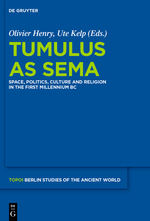
O. Henry, U. Kelp (éd.), Tumulus as SEMA; Space, Politics, Culture and Religion in the first millennium BC

O. Henry, U. Kelp (éd.), Tumulus as SEMA; Space, Politics, Culture and Religion in the first millennium BC, Berlin, De Gruyter Mouton, 2016. Tumuli were the most widespread form of monumental tombs in the ancient world. Their impact on landscape, their allurement as well as their symbolic reference to a glorious past can still be felt today. The need of supra-regional and cross-disciplinary examination of this unique phenomenon led to an international conference in Istanbul in 2009. With almost 50 scholars from 12 different countries participating, the conference entitled TumulIstanbul created links between fields of research which would not have had the opportunity to meet otherwise. The proceedings of TumulIstanbul revolve around the question of the symbolic significance of burial

Lire la suite »

Norig Neveu – Developing Ottoman education in Southern Transjordan in the late 19th century – 11/4/2016

Lundi 11 avril 2016 à 18h à l’IFEANorig Neveu (IFPO)Dans le cadre du séminaire « Sciences et savoirs dans l’Empire ottoman » « Developing Ottoman education in Southern Transjordan in the late 19th century » In the late 19th century, the Ottoman reassertion of power in the Southern regions of the Bilâd al-Sham went along with the implementation of new educational policies fitting the reforms (Tanzimat) agenda. The Ottoman educational strategy including the establishment of new schools and new curriculum aimed to spread common values including allegiance to Ottoman rule the establishment of a local loyal elite. This was accompanied by the appointment of Muslim preachers and copies of the Koran to reform and standardize the local religious practices. My presentation will focus on

Lire la suite »

Hatice Pınar Şenoğuz – Violence and conflict across the boundaries of ethnicity: Clashes among migrant communities after Syrian migration in Gaziantep – 28/4/2016

Dans le cadre du AMiMo working paper seminar 2016Jeudi 28 avril 2016 à 17h à l’IFEAHatice Pınar Şenoğuz (Université de Gaziantep) Violence and conflict across the boundaries of ethnicity: Clashes among migrant communities after Syrian migration in Gaziantep This paper addresses the ways in which the forms of discrimination and marginalization develop contention among the migrant communities after the arrival of Syrians in the conflict-ridden outskirts of Gaziantep. The prolonged stay of the Syrians and their outnumbering in ghettoized areas, particularly around the poor neighborhoods, changed the demography of urban settlements and escalated tension among locals into sporadic and widespread violence against refugees. These conflicts crosscut former ethnic-religious clashes among the locals, especially surrounding the ‘Kurdish question’. In the outskirts

Lire la suite »

Adeline Braux – Relocation from Russia to Azerbaijan: adaptation experiences of young Russian-Azerbaijanis to their parents’ homeland – 5/4/2016

Dans le cadre des conférences AMiMoMardi 5 avril 2016 à l’IFEA à 17hAdeline Braux (IFEA, Bakou) Relocation from Russia to Azerbaijan: adaptation experiences of young Russian-Azerbaijanis to their parents’ homeland Around 800,000 Azerbaijanis live in the Russian Federation, among them a significant number of young second-generation people. The collapse of the USSR gave rise to these first ‘hyphenated Russian-Azerbaijanis’, who find themselves between two cultural spaces but are generally embedded in the Russian environment they have always lived in. This article focuses on the way these young people cope with relocation to Azerbaijan. Based on new material gathered during extensive fieldwork in different regions of the country, the conference will explore the issues of adaptation from a practical point of

Lire la suite »

De la rivalité impériale à la « politique de bon voisinage » Approche bibliographique des relations turco-iraniennes de 1501 à 2010

La Turquie et l’Iran actuels sont les héritiers de grands empires qui ont dominé le Moyen-Orient durant des siècles. Ils entretiennent à ce titre des liens diplomatiques et des rivalités très anciennes, entre les Ottomans sunnites et les dynasties iraniennes safavide puis qâdjâr, promotrices de l’alévisme, puis du chiisme. Ces relations ont été abondamment étudiées par des chercheurs orientalistes, dont certains ouvrages sont consultables à la bibliothèque de l’Institut français d’études anatoliennes. S’attaquant à la base historique de ces relations, certains auteurs, tels Jean-Louis Bacqué Grammont et Adel Allouche se sont intéressés aux origines de la rivalité ottomano-safavide. D’autres auteurs, comme Vecih Kevserani ou Bekir Kütükoğlu, vont décrire de manière plus générale les relations entretenues par les deux puissances au

Lire la suite »