

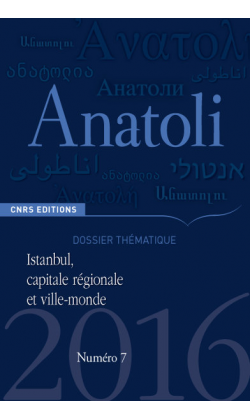
Anatoli 7 Istanbul, capitale régionale et ville-monde
Anatoli 7: Istanbul, capitale régionale et ville-monde, sous la direction de Jean-François Pérouse, Paris, CNRS Éditions, 2016, 316 p. ISBN : 978-2-271-09329-5

Anatoli 7: Istanbul, capitale régionale et ville-monde, sous la direction de Jean-François Pérouse, Paris, CNRS Éditions, 2016, 316 p. ISBN : 978-2-271-09329-5
Jean-François Pérouse, « Başat Şehir Gündeminin Arkası : İstanbul’da Son 10 Yılda Gelişen Sinsi Kentsel Dönüşüm », in Y. Dülgeroğlu Yüksel, E. Gür & D. Yıldız, İstanbul’da konut (binbir çeşit), İstanbul, İTÜ Vakfı Yayınları, 2016, 45-50.
Mercredi 2 novembre 2016 à 18h à l’IFEAFerhat Kentel (Université de Şehir), Murat Öztürk (Université de Kırklareli), Perrin Öğün (Université de Kadir Has)Dans le cadre du Séminaire « Recompositions, représentations et usages de l’environnement en Turquie et dans son voisinage »Intervention en anglaisInscription avant le 1er novembre : https://www.inscription-facile.com/form/Qczlsn299zmzlw56RZVj « Socio-Economic and Cultural Reproduction of Rural Space » This paper will present transformation of the rural space based on the findings of the research project “The Socio-economic and Cultural Transformation of Rural Space: Modernising and Disappearing Traditional Spaces and Meanings”[1]. The main argument/problematic of the research is how the villagers cope with the substantial modernist ideological discourse of “unavoidable end of the village”. A considerable majority of the villagers believe and/or are convinced that
2 Kasım 2016 Çarşamba saat 18’de IFEA’daFerhat Kentel (Şehir Üniversitesi), Murat Öztürk (Kırklareli Üniversitesi), Perrin Öğün (Kadir Has Üniversitesi)« Türkiye’de ve komşularında çevre alanında yeni oluşumlar, çevrenin temsili ve kullanımı » semineri çerçevesindeSunum dili İngilizcedir. En son kayıt tarihi 1 Kasım’dır: https://www.inscription-facile.com/form/Qczlsn299zmzlw56RZVj Kır mekânının sosyo-ekonomik ve kültürel açıdan yeniden üretimi Bu çalışma, “Kır mekânının sosyo-ekonomik dönüşümü: modernleşen ve kaybolan geleneksel mekânlar ve anlamlar” adlı araştırma projesinin bulgularına dayalı olarak, kır mekânının dönüşümünü irdeleyecektir[1]. Araştırmanın temel tartışması/sorunsalı köylülerin “köyün kaçınılmaz sonu” ideolojik söylemi ile nasıl başa çıktıkları üzerinedir. Köylülerin önemli bir kısmı “bir gün köyler ve köylüler yok olacak” inancına sahiptir ya da buna inandırılmıştır; bununla birlikte köylerin önemli bir azınlığı, bu “varış noktası”na karşı mücadele içindedir ve bu konuda başarı göstermektedir. Köylülerin başarısı yalnızca mevcut düzeni “sürdürmeleri”
17 Oct 2016 : la carte de la semaine. Carte en Armenien du Bosphore, partie du centre, tirée de l’ouvrage de géographie de Gugas Inciyan, 1791, collection particulière Öner.
Jeudi 10 novembre 2016 à 18h30 à l’IFEAEtienne Charrière (RCAC)Dans le cadre du Séminaire « Sciences et savoirs dans l’Empire ottoman » Inscription avant le 9 novembre : https://www.inscription-facile.com/form/fidZk8hOVkkEdDMX9o6Z « The Novel from Commodity to Technology: Producing and Consuming Prose Fiction in the Late Ottoman Empire » When we discuss the development of a culture of the novel in the late Ottoman Empire, it appears crucial to emphasize that the emergence of this particular genre in the largest urban centers of the Empire in the second half of the nineteenth century was determined by two crucial parameters. First, the development of the Ottoman novel constituted a truly trans-communal phenomenon and was the product of a space marked by an uncommonly dense traffic in languages