English description below the French version.
Description française:
Le projet GABAR : analyse des mortiers et enduits peints, qui vise à comprendre l’occupation de la Cappadoce occidentale. Ce projet est soutenu pa Archéologie & Patrimoine en Méditerranée (ARPAMED), le premier fonds dédié à l’archéologie française en Méditerranée et dont les missions sont de soutenir des projets archéologiques innovants, protéger et mettre en valeur un patrimoine culturel essentiel en Méditerranée, ainsi que par l’IFEA, Koç Université, Koç University Surface Science and Technology Center (KUYTAM), le laboratoire d’histoire des rhétoriques, l’Association des Amis de la Cappadoce et la société DTalents.
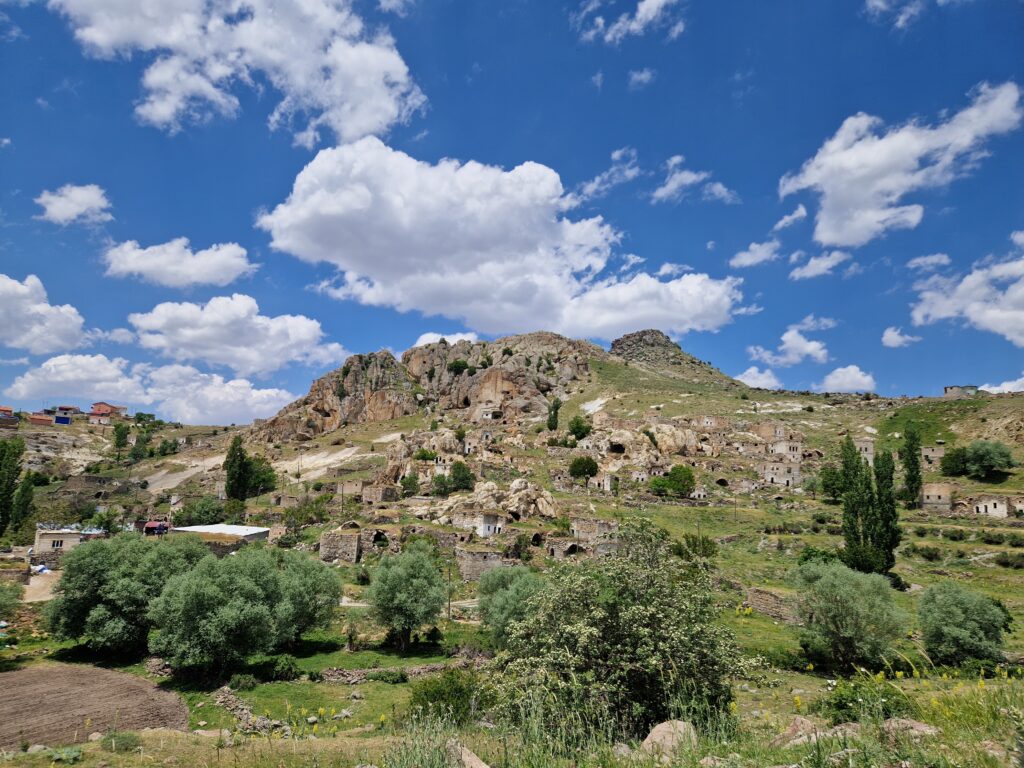
La Cappadoce est principalement connue pour ses églises rupestres peintes, souvent étudiées à travers le prisme de l’histoire de l’art. Le projet GABAR (Güzelyurt–Akyamaç–Sivrihisar), seul projet de prospections sous pavillon français actuellement autorisé en Turquie, propose une approche archéologique renouvelée de la Cappadoce occidentale, encore peu explorée.
Le projet vise à mieux comprendre les modalités de construction, de décoration et d’occupation des monuments sur la longue durée, en s’appuyant notamment sur l’étude des mortiers, enduits peints et pigments, collecté durant la campagne 2025 de prospection. Ces matériaux constituent des sources essentielles pour identifier les techniques mises en œuvre, les réseaux d’approvisionnement et proposer de nouveaux critères de datation, complémentaires des analyses architecturales et stylistiques.
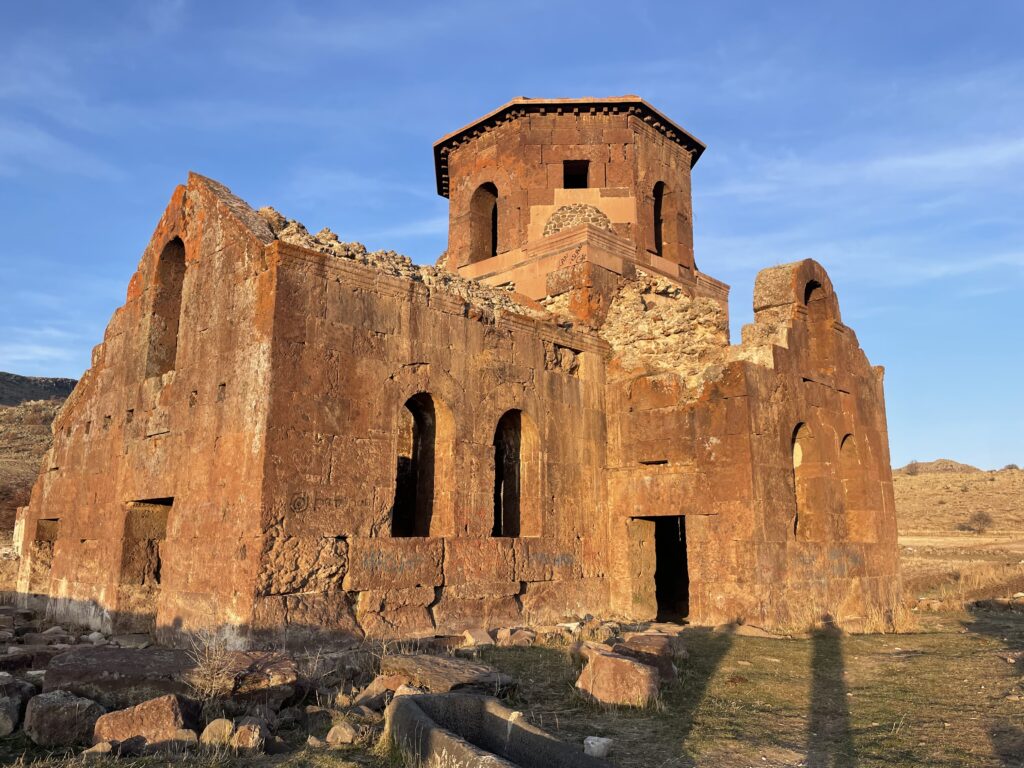
Les recherches portent sur un ensemble de monuments associant architecture bâtie et rupestre: une forteresse, plusieurs églises creusées dans la roche et la Kızıl Kilise (Église Rouge) de Sivrihisar, monument emblématique de la région, seul à posséder encore aujourd’hui sa coupole. Les analyses reposent sur des méthodes spécialisées, incluant analyses thermo-gravimétriques, diffraction des rayons X et études pétrographiques de lames minces, seront réalisées principalement dans les laboratoires de l’université de Koç (archéologique et du KUYTAM).
La structure même du projet a pour objectif de renforcer la collaboration scientifique entre la Turquie et la France par son caractère collaboratif. Le projet, coordonné par le Dr. Anaïs Lamesa, le Prof. Rana Özbal (directrice du laboratoire de l’université de Koç) et le Dr. Ebru Kaner (Koç Université), a pour objet d’accueillir le Prof. Jean-Michel Meschling et Alexandre Flammang de l’Université de Lorraine et Arnaud Coutelas de la société DTalents dans le cadre d’un workshop alliant théorie et pratique autour l’analyse de ces matériaux de construction (de la réalisation de lames minces à l’analyse au microscope).
Croisant recherche et formation, le projet vise à contribuer à une meilleure compréhension de l’occupation de la Cappadoce occidentale de l’Antiquité à l’époque médiévale et à fournir des données indispensables à la conservation et à la valorisation du patrimoine.
Projet porté par Dr. Anaïs Lamesa, chercheuse sur contrat à l’université d’Edimbourg (UKRI, Marie Curie), ancienne pensionnaire scientifique de l’Institut français des études anatoliennes (IFEA).
English description:
The GABAR project: analysis of mortars and painted plasters, which aims to understand the occupation of western Cappadocia. This project is supported by Archaeology & Heritage in the Mediterranean (ARPAMED), the first fund dedicated to French archaeology in the Mediterranean and whose missions are to support innovative archaeological projects, protect and enhance an essential cultural heritage in the Mediterranean, as well as by the IFEA, the University of Koç, Koç University Surface Science and Technology Center (KUYTAM), the Laboratory of the History of Rhetoric, the Association of Friends of Cappadocia and the company DTalents.
Cappadocia is chiefly renowned for its painted rock-cut churches, which have long been studied primarily through the lens of art history. The GABAR Project (Güzelyurt–Akyamaç–Sivrihisar), currently the only French-led survey project authorised in Türkiye, proposes a renewed archaeological approach to western Cappadocia, a region that remains comparatively underexplored.
The project seeks to gain a clearer understanding of the construction, decoration and long-term occupation of monuments, drawing in particular on the study of mortars, painted plasters and pigments collected during the 2025 field survey. These materials constitute essential sources for identifying technical practices, supply networks and for proposing new dating criteria, complementing architectural and stylistic analyses.
Research focuses on a group of monuments combining built and rock-cut architecture: a fortress, several rock-cut churches, and the Kızıl Kilise (Red Church) at Sivrihisar, an emblematic monument of the region and the only one to have preserved its dome to this day. The analyses rely on specialised methods, including thermogravimetric analysis, X-ray diffraction and petrographic examination of thin sections. These investigations will be carried out primarily in the laboratories of Koç University (Laboratory of Archeology and KUYTAM).
The structure of the project is designed to strengthen scientific collaboration between Turkey and France through its inherently collaborative framework. Coordinated by Dr Anaïs Lamesa, Prof. Rana Özbal (Director of the Laboratory at Koç University) and Prof. Dr. Ebru Kaner (Koç University), the project aims to host Prof. Jean-Michel Meschling and Alexandre Flammang (University of Lorraine), as well as Arnaud Coutelas (DTalents), for a workshop combining both theoretical and practical components focused on the analysis of these construction materials, ranging from the preparation of thin sections to microscopic analysis.
Bringing together research and training, the project aims to contribute to a more comprehensive understanding of occupation in western Cappadocia from Antiquity to the medieval period, while providing essential data for the conservation and enhancement of this cultural heritage.
The project is led by Dr Anaïs Lamesa, Research Fellow at the University of Edinburgh (UKRI, Marie Skłodowska-Curie Actions), and former scientific fellow of the French Institute for Anatolian Studies (IFEA).
Principaux supports / Main supports :