


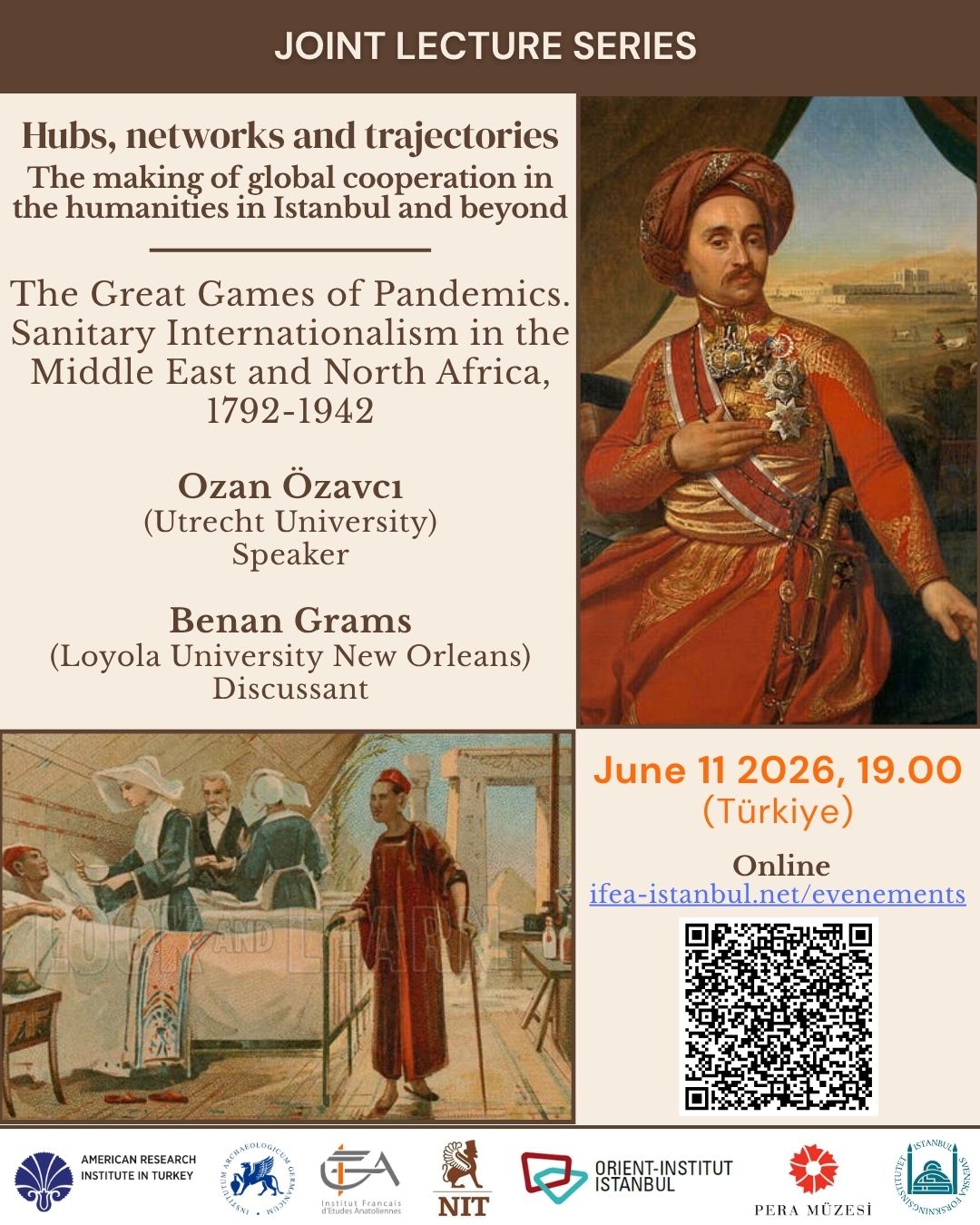
Ozan Ozavci’s presentation will offer an exploratory introduction to how the councils in MENA came into existence and why it is crucial to consider their work as the onset of sanitary internationalism. Drawing on the findings of his ERC COOPERATION project from archives in Europe, North America, MENA and Russia, he will argue that rather than top-down Great Power imposition on MENA polities alone, it was the reciprocal interest calculations that prompted these decentralised, more dynamic and yet largely overlooked forms on transimperial cooperation in pursuit of health security. Yet, all along, the councils had to overcome the familiar barriers to collective action such as Orientalist and racial prejudices, economic and financial considerations, as well as religious and nationalist backlashes within a multi-polar, imperial world.
Short Bio:
Ozan Özavcı is Associate Professor of Transimperial History at Utrecht University, co-convenor of the Lausanne Project and principal investigator of the ERC CoG COOPERATION project. In addition to several book chapters and articles published in leading historical journals, he is the author of three monographs, most notably Dangerous Gifts: Imperialism, Security, and Civil Wars in the Levant, 1798–1864 (OUP, 2021). He is also the co-editor of three volumes, among them Securing Empire: Imperial Cooperation and Competition in the Nineteenth Century (Bloomsbury, 2024, together with Beatrice de Graaf and Erik de Lange), and co-author of a graphic novel on peace-making in the early twentieth century. He is currently working on a fourth monograph on the making of global north-south public health cooperation.